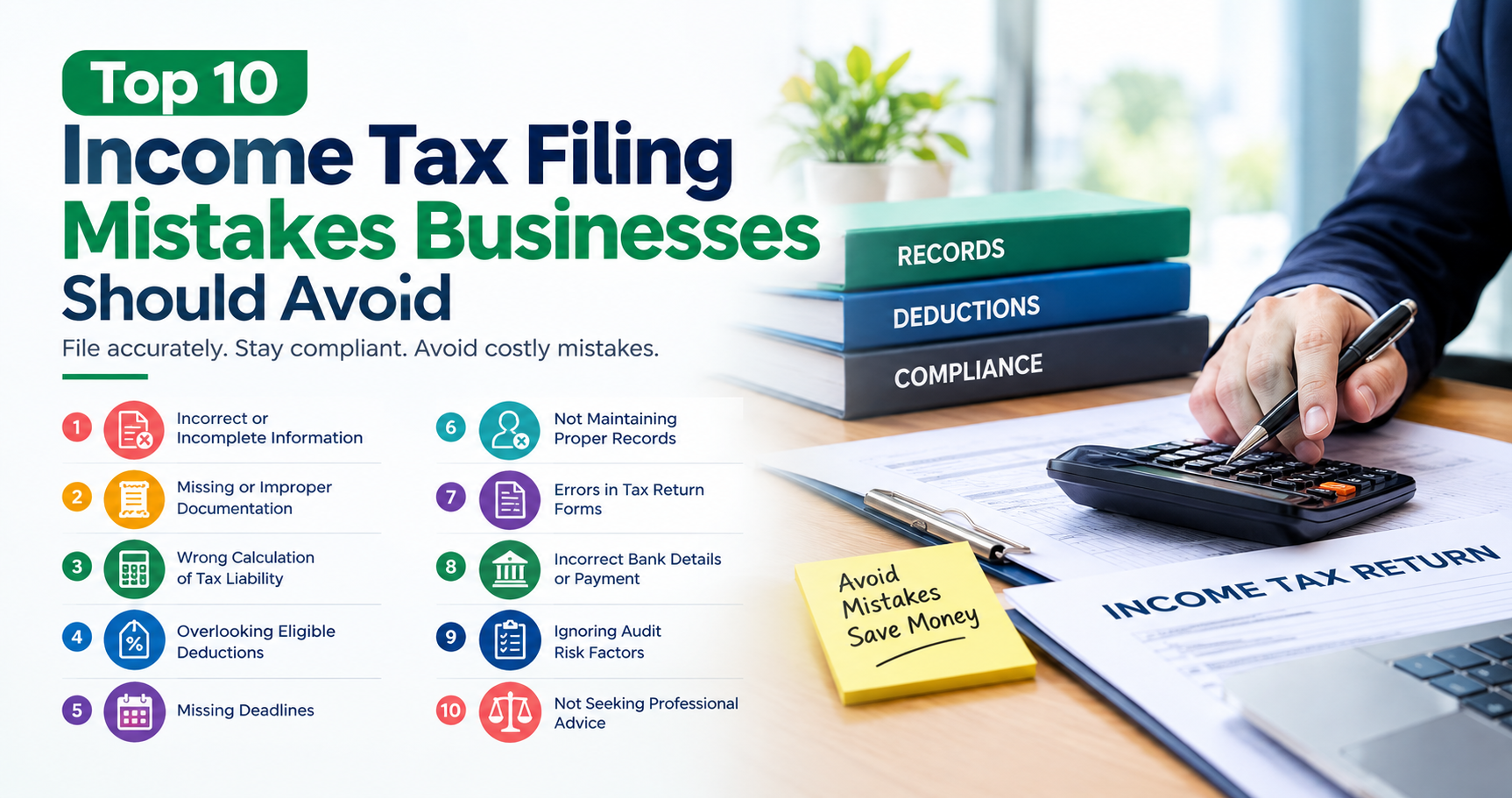
Filing income tax as a business in Bangladesh is one of those tasks that feels “routine” right up until it isn’t. A small mismatch in figures, a missed schedule, or a late submission can trigger notices, penalties, and unnecessary back-and-forth. The National Board of Revenue (NBR) administers income tax in Bangladesh under the Income Tax Act, 2023, making accurate filing and compliance especially important. The good news is that most tax issues we see are preventable. They usually come from a handful of repeating mistakes.
In this guide, we will walk through the top income tax filing mistakes businesses should avoid in Bangladesh, with practical context so you can spot risks early and file with confidence.
1. Not Registering Properly Or Using Incorrect Taxpayer Information
One of the most basic errors is also one of the most expensive later. Businesses sometimes operate using incomplete registration details, outdated information, or mismatched records across documents. Even small discrepancies, like spelling differences in the business name or address inconsistencies, can create complications during assessment or when responding to a notice.
Mismatches between NID, Trade License, and e-TIN information can create additional verification issues, delay tax-related processes, and make it harder to establish that all records belong to the same taxpayer or business. Make sure your e-TIN, business name, address, contact details, and nature of business are consistent across your tax profile, bank records, trade license, NID, and financial statements.
2. Missing The Due Date Or Filing Late
Late filing can lead to penalties, additional scrutiny, and a stressful rush that increases the chance of errors. For companies, understanding the applicable Tax Day is especially important; the filing deadline may generally fall on 15 January or within the prescribed period, such as six months after the end of the relevant income year, depending on the applicable tax rules. Many businesses delay because they are waiting for final accounts, bank statements, or supporting papers, and then the deadline arrives faster than expected.
Build a simple internal calendar and start preparing earlier than you think you need. A clean, timely filing is usually cheaper than fixing issues after the fact.To avoid these common pitfalls and ensure smooth income tax filing in Bangladesh, it’s advisable to seek professional assistance.
3. Mixing Personal And Business Expenses
This is a common habit in owner-managed businesses. When personal spending runs through business accounts, it becomes hard to justify expenses as wholly and exclusively incurred for business purposes, consistent with the NBR’s approach to allowable business expenses. It can also distort profit, make audit trails messy, and trigger questions during assessment.
A separate business bank account, clear expense categories, and proper vouchers make a big difference. Even if you are a small business, clean separation keeps your tax position strong.
4. Failing To Maintain Proper Books, Vouchers, And Supporting Documents
Numbers alone are not enough. If your return shows expenses, the supporting documents should exist and be organized. The basic principle is “No proof = No deduction”: without adequate supporting evidence, a claimed business expense may not be accepted as an allowable deduction. Many businesses file using estimates or incomplete records, assuming they can “manage later” if asked. That is risky.
Keep invoices, bills, contracts, rent agreements, salary sheets, bank statements, and payment proofs arranged by month. If you ever need to justify a claim, the paperwork should back it up without panic.
5. Claiming Ineligible Deductions Or Overstating Expenses
Over-claiming is not always intentional. Sometimes it happens because businesses treat all costs as deductible without checking rules, or they record capital expenditure as revenue expense. Capital expenses generally relate to acquiring or improving long-term assets, while revenue expenses relate to the ordinary costs of running the business. The result is an inflated expense figure that may be disallowed, increasing tax and creating credibility issues.
When in doubt, confirm whether an item is allowable, whether it is a capital or revenue expense, and whether depreciation should be claimed on the relevant asset instead of deducting the full cost immediately. Being conservative and correct often protects you better than being aggressive.
6. Ignoring Withholding Tax Obligations
Withholding tax (TDS) is a major compliance area in Bangladesh. Businesses may deduct tax but fail to deposit it on time, apply the wrong rate, or forget to issue certificates where required. Others forget to deduct it entirely on applicable payments under the relevant Section 56 / TDS Rules.
This mistake can create tax exposure, and where applicable TDS requirements are not complied with, the related expense may be disallowed for tax purposes, in addition to penalties and other consequences. Review your common payment types, such as rent, contractors, professional fees, suppliers, and imports, then verify applicable rates, deduction requirements, and deposit timelines.
7. Not Reconciling Financial Statements With Tax Return Figures
A frequent trigger for queries is mismatch between audited accounts, bank activity, VAT records, and the tax return. Even if the overall tax is correct, inconsistent reporting looks suspicious and invites questions. The sales reported in the VAT return (Mushak 9.1) should be properly reconciled with the sales reported in the income-tax return, with any legitimate differences clearly explained and supported.
Before filing, reconcile sales, purchases, expense totals, loans, capital, and bank balances. Also ensure the return schedules align with the financial statements, VAT records, and supporting notes.
8. Misclassifying Income Sources
Businesses sometimes misclassify income, such as treating other income as business income without proper details, or omitting bank interest, capital gains, scrap sales, commission income, or one-time receipts. Hiding or reporting these income sources under the wrong category can lead to underreporting, incorrect tax treatment, missing schedules, tax adjustments, penalties, and unnecessary scrutiny. This can create underreporting issues or missing schedules in the return.
List every income stream your business touches, even if it feels small. If it appears in bank statements, it should usually appear in your accounting and tax reporting, with the correct head and explanation.
9.Forgetting To Report Advance Tax, Adjustments, Or Credits Properly
Some businesses pay advance tax, face withholding at source, or have adjustments from previous periods, but do not reflect them accurately in the return. This can lead to overpayment, delayed refunds, or notices asking for clarification. Keep a file of all challans, withholding certificates, and payment proofs. Then match them carefully to what you claim in the return.
10. Filing Without Reviewing, Or Copying Last Year’s Return Blindly
Many errors come from rushing. Others come from copying last year’s figures and making only minor changes, even though business activity has changed. A new revenue stream, a new branch, new assets, or new transactions can require updated disclosures, especially when rules change under the latest Finance Act.
Tax rates, filing requirements, allowable deductions, and disclosure rules may change from year to year, so relying blindly on previous returns can create compliance risks. Before submission, do one final review focusing on consistency, schedules, attachments, supporting documents, and the latest Finance Act requirements. A slow 30-minute review can save weeks of future trouble.